House Designer : Fix & Flip
- 4.6
- Rating
- 100.00M
- Installs
- Free
- Price

 Analysis by App-foxy
House Designer: Fix & Flip immediately presents itself as a relaxed adventure game built around the satisfaction of changing a home from tired to inviting. I found the appeal easy to understand: instead of rushing through combat or chasing a complicated plot, I spend my time looking at a property, deciding what needs attention, and gradually giving it a more personal identity. It is a simple idea, but the visual reward of seeing a room improve gives the game a clear reason to keep playing.
Developed by TURBOGOOSE GAMES, it is free to start and aimed at Everyone, which makes it approachable for younger players and for adults who want something calmer than the usual action-focused adventure game. The store summary talks about designing, but the actual attraction is the complete loop around that idea: inspect a space, clean or repair what looks neglected, make design choices, and enjoy the result. I would describe it as a home-improvement adventure with a light simulation feel rather than a serious interior-design tool.
Its popularity is hard to overlook. The game has passed 100 million installs, carries a 4.6 average from around 1.1 million ratings, and has accumulated roughly 21 thousand written reviews. Those figures suggest that the basic formula connects with a very broad audience. After spending time with it, I can see why: the controls are easy to understand, the objectives are usually visible, and the reward is presented in a way that makes even a small improvement feel worthwhile.
You May Also Like

 AccuWeather: Weather Radar
AccuWeather Review: A Quick, Clear Forecast for Everyday Decisions
For everyday plans, the best forecast is the one you can understand quickly. AccuWeather makes rain timing, radar, and local conditions easy to act on, with a few trade-offs.

 Hill Climb Racing
Why Hill Climb Racing Still Turns Crashes Into One More Run
A tiny car, a bumpy hill and one more upgrade: Hill Climb Racing keeps resurfacing because its simple chaos makes every near-miss feel personal.

 AliExpress - Shopping App
AliExpress Makes Global Shopping Feel Personal, but Shoppers Bear the Risk
AliExpress turns a global marketplace into a pocket-sized discovery engine. Its reach is useful, its shopping loop compelling, and its trade-offs easy to miss.

 Lords Mobile: Kingdom Wars
Lords Mobile Is a Kingdom-Building Routine, Not a Quick Match
A case-by-case verdict on the building, battles, device demands, and social commitments that make Lords Mobile rewarding for some players and exhausting for others.

 PDF Scanner app - TapScanner
TapScanner Makes Paperwork Easier to Capture, Check, and Share
TapScanner makes scanning with a phone feel less like a rescue operation and more like a dependable step in getting work done. Its capture tools are useful, though not flawless.

 Block Blast!
 Shows How Much a Puzzle Game Can Leave Out
A quiet grid game shows why puzzle players increasingly value instant clarity, repeatable skill and low-pressure play—and where the genre still needs to catch up.
More From Our News Desk
View All News


From a neglected room to a playable home
My first impression was shaped less by complexity than by clarity. House Designer: Fix & Flip does not need a long explanation to communicate its purpose. A room that looks unfinished gives me an obvious starting point, and each task points toward a visible transformation. That is useful on a phone because I can open the game without preparing for a demanding session. A few minutes can be spent on one practical job, while a longer session can be devoted to reshaping a whole property.
The game’s best early quality is its sense of progress. Cleaning, arranging, and improving a space are not abstract menu actions; they are tied to what I can see on screen. A dull area becoming more orderly gives a stronger response than a number simply increasing. This makes the experience particularly suitable for players who enjoy before-and-after changes, decorating, and gentle task completion.
There is also a pleasant lack of pressure in the central fantasy. I am not being asked to master a difficult combat system before I can enjoy the setting. The adventure label fits because I move through properties and work through objectives, but the emotional tone is closer to a hands-on renovation project. If you like games where the reward is a tidier room, a better layout, or a more finished-looking environment, the premise has enough substance to hold attention.
That opening simplicity can also expose the game’s main limitation. Players who need a strong narrative hook, dramatic characters, or constant surprises may find the first sessions too quiet. The appeal depends on caring about the work itself. If the thought of cleaning, repairing, and decorating virtual spaces sounds like a chore rather than a reward, the game is unlikely to change your mind.
Reading the spaces instead of chasing spectacle
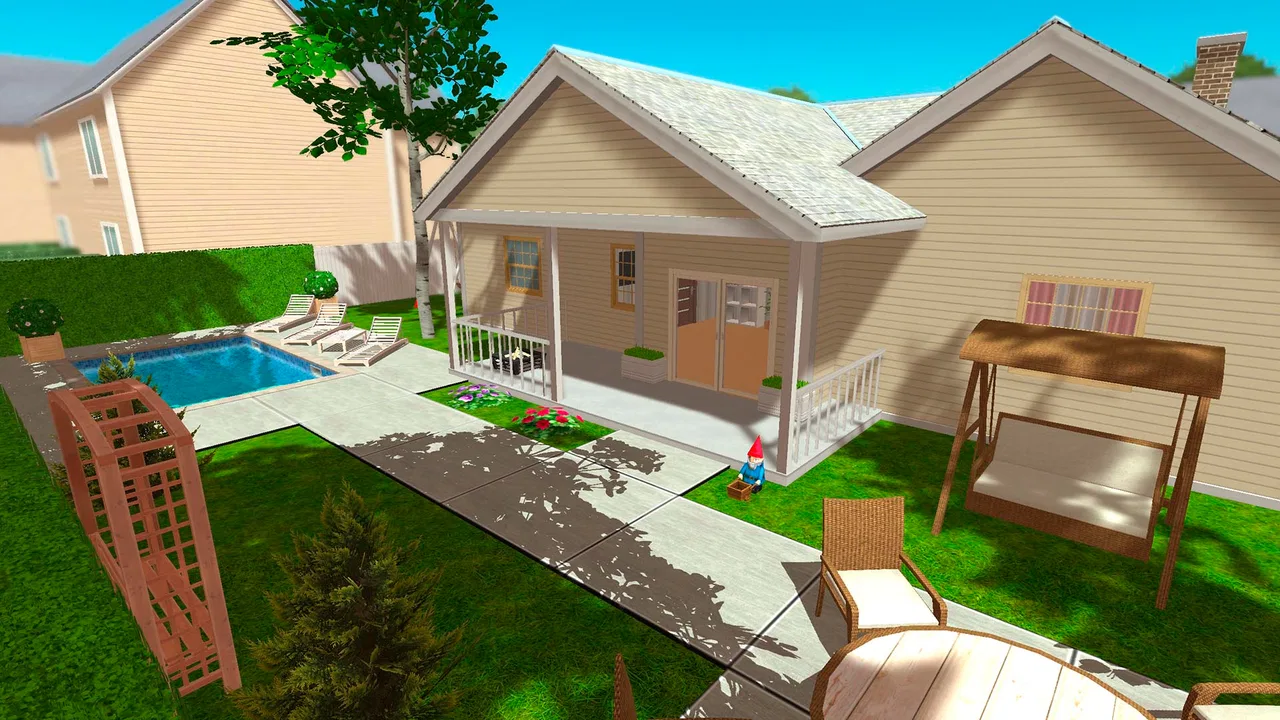
The visual language is built around recognizable domestic details. Rooms, furniture, surfaces, and outdoor areas communicate their condition quickly, so I rarely have to wonder what the game wants me to notice. A damaged or empty-looking space creates a practical question: what should be dealt with first, and what kind of finished atmosphere do I want later?
That straightforward presentation helps the game keep its mood coherent. The surroundings are not trying to look like a fantasy kingdom or a high-stakes disaster zone. They feel like places that could plausibly be improved by a determined owner. This grounded setting is important because it turns small actions into the main spectacle. A newly arranged corner matters because the game has trained me to look at the home as a whole.
I especially like the way the setting encourages a short planning pause. Rather than tapping randomly, I can scan a room, identify the areas that look most unfinished, and decide whether I want to follow the immediate task or think ahead about the final appearance. That habit is one of the more useful ways to play: take a moment to read the space before spending resources or committing to a visual choice.
The design is not as deep as a dedicated interior-decoration simulator. I would not use it as a substitute for software intended to plan a real room, compare exact measurements, or build a detailed architectural layout. Its strength is the feeling of hands-on improvement, not precision. The game wants me to enjoy the transformation, not produce a technically accurate renovation plan.
Another trade-off is that the visual reward can become predictable. Once I understand the pattern of identifying a problem and completing the corresponding task, the surprise comes less from discovery and more from the accumulation of improvements. That is not necessarily a flaw for a relaxing game, but it means the experience works best in moderate sessions rather than as an endless marathon.
Why the sound and pacing matter
The sound design supports the game’s practical mood instead of competing with it. Actions feel connected to the idea of working on a property, and the overall presentation leaves room for the visual changes to carry the emotional weight. I do not come away remembering a dramatic soundtrack or an elaborate audio world; I remember the quiet satisfaction of making a place feel more complete.
That restraint suits the pacing. House Designer: Fix & Flip is at its most comfortable when I let it move at a steady, unhurried rhythm. I can inspect an area, complete a task, look at the result, and then decide what deserves attention next. The pause between actions is part of the appeal because it gives the transformation time to register.
This makes it a useful game for everyday gaps. I can imagine playing it after work while waiting for dinner, during a short break, or on a quiet weekend morning when I want a clear goal without mental overload. A realistic session might begin with the intention of fixing one room, continue into a second task because the first result looks encouraging, and end once the space feels sufficiently improved. The game does not require me to remember a complicated story or rebuild a strategy from scratch after putting it down.
The same relaxed rhythm will not suit everyone. If you prefer quick rounds, constant rewards, or energetic competition, the pacing may feel slow. It also asks for patience when a project involves several small steps. I think of that as the central mood choice: this is a game for settling into a process, not for rushing toward a spectacular finale.
Where the mechanics earn their place
The mechanics fit the setting because the tasks have an understandable relationship with the property. I am not completing unrelated mini-games just to fill time; the work is presented as part of improving the home. That connection gives ordinary actions a sense of purpose. Even when an individual job is basic, it contributes to the larger visual goal.
One practical tip is to treat each property as a sequence of priorities rather than a collection of taps. I first look for the work that changes the room’s overall condition, then deal with smaller details. This approach makes the transformation easier to read and reduces the feeling of wandering from one isolated objective to another. It also helps when I want to stop playing at a natural point, because a major improvement usually provides a clearer sense of completion than several minor actions.
A second useful habit is to separate functional progress from personal taste. Some choices are about making the space usable or finished, while others are about the look I want. Keeping those purposes distinct prevents me from judging every action only by appearance. The game becomes more enjoyable when I accept that a practical step can be worthwhile even before the final decoration comes together.
A third insight is that the before-and-after view is more valuable than any single object. I get more satisfaction by considering how a room feels as a complete scene than by obsessing over one piece of furniture or one surface. That broader approach also makes the art direction clearer: the game is selling the mood of a livable home, not just a catalog of individual items.
The free entry point makes it easy to test whether this loop works for you. There are in-app purchases ranging from 49 cents to $69.99 per item, so I would recommend deciding early how you want to play. If you enjoy gradual progress, there is no reason to assume that spending is necessary for the basic appeal. If you are the kind of player who dislikes any temptation to accelerate progress or buy extras, the presence of those options may be a reason to approach cautiously.
For a younger player, the Everyone age rating makes the concept approachable, but I would still treat purchase controls as a family matter. The game’s subject is harmless and easy to understand, yet any free-to-play title with optional items deserves sensible device settings. Adults who share a phone or tablet should also make sure that accidental purchases are not an easy possibility.
How it compares with other relaxing adventures
Compared with a traditional adventure game, this one replaces exploration danger and narrative momentum with domestic progress. There is less emphasis on surviving a hostile world and more on noticing what a property needs. That makes it a better choice for someone who wants the language of adventure without combat-heavy tension.
Compared with a pure decorating game, it adds a stronger sense of work before the final presentation. I am not simply choosing attractive objects from the beginning; the property has to be dealt with as a project. That extra layer gives the design decisions more context, although players seeking maximum creative freedom may prefer a dedicated building or interior-design game.
Compared with a management simulator, House Designer: Fix & Flip feels lighter and more immediate. I do not approach it as a spreadsheet or a long-term business plan. The focus stays close to the property in front of me, which makes it easier to play casually but limits the strategic depth that simulation fans may expect.
That positioning is its clearest strength. It occupies a comfortable middle ground between cleaning games, home-design experiences, and gentle adventure. The trade-off is that it may not fully satisfy specialists in any one of those categories. I would choose it for accessible, visual, task-based relaxation, not for complex economics, realistic construction, or a story-driven campaign.
Who will enjoy the renovation loop
I recommend it to players who like visible progress and calm objectives. It is particularly well suited to anyone who enjoys organizing spaces, imagining how a room could feel, or completing a chain of manageable tasks. It can also work for families looking for an approachable game concept, provided that optional purchases are handled responsibly.
It is less suitable for someone who wants a deep narrative, demanding controls, competitive multiplayer, or a constant stream of new mechanics. The game’s satisfaction comes from repetition with variation: another area, another improvement, another chance to make a property feel better. If that structure sounds comforting, it can be surprisingly easy to return to. If it sounds repetitive, the large install base will not change the underlying fit.
Device compatibility is broad enough for older supported phones and tablets, since the minimum requirement is Android 7.0. The current version is 1.87, which is useful to know when checking whether a device can run it. I would still judge the experience on the specific phone, because screen size and touch responsiveness can affect how comfortable it is to inspect rooms and select small objects.
My final view on the atmosphere
House Designer: Fix & Flip succeeds because its art direction, sound, and pacing all point toward the same feeling: steady improvement in a familiar place. The mechanics are uncomplicated, but they belong to the setting. I am not being pulled between a peaceful home-design mood and an unrelated action system. The game knows that its pleasure comes from seeing a neglected property become more inviting.
Its limitations are equally clear. The task structure can feel repetitive, the visual freedom is not the same as a professional design tool, and players who want urgency or a powerful story may lose interest. Optional purchases also mean that I would play with a little awareness rather than treating the free label as the whole financial picture.
Even with those reservations, I think it is an easy recommendation for the right person. The developer has built a widely accessible adventure game around a simple but effective emotional reward: taking something unfinished and making it feel like yours. I would suggest trying it when you want a low-pressure project, especially if you enjoy before-and-after transformations more than dramatic action.
My strongest recommendation is to play it as a mood game, not a race. Give each space a quick visual plan, focus on the changes that improve the whole room, and stop when the property feels complete enough for the moment. Played that way, its modest mechanics become an advantage, and the quiet rhythm gives the renovation fantasy room to work.
FAQs for House Designer : Fix & Flip
01What is House Designer: Fix & Flip about?
House Designer: Fix & Flip is a simulation game that allows players to renovate and decorate homes to sell them for a profit. You can purchase run-down properties, use a variety of tools and decorations to fix them up, and then flip them to earn money. It's perfect for those who enjoy interior design and strategic gameplay.
02Is House Designer: Fix & Flip free to play?
Yes, House Designer: Fix & Flip is free to download on both Android and iOS platforms. However, it offers in-app purchases that enhance the gaming experience, such as additional resources and decorative items. While the game is enjoyable without spending money, some players opt for these purchases to progress faster.
03What are the system requirements for House Designer: Fix & Flip?
For Android users, a device running Android version 4.4 or higher is recommended. iOS users will need a device running iOS 9.0 or later. The game is optimized for both smartphones and tablets, ensuring a smooth experience across different devices. Make sure your device has sufficient storage space before downloading.
04Can I play House Designer: Fix & Flip offline?
Yes, House Designer: Fix & Flip can be played offline, making it convenient for users without constant internet access. However, certain features, like updates and in-app purchases, require an internet connection. Playing offline is perfect for long trips or areas with limited connectivity.
05How does the game handle updates and new content?
The developers regularly update House Designer: Fix & Flip with new content, including additional homes, tools, and decorative options. Updates are automatically available from the app store, ensuring players have access to the latest features and improvements. Keeping the game updated also ensures optimal performance.
Pros
- Intuitive controls make gameplay smooth.
- Wide variety of design options available.
- Engaging challenges keep players hooked.
- Regular updates with new content.
- Offline mode for uninterrupted play.
Cons
- Limited inventory space can be frustrating.
- Occasional lag on older devices.
- In-app purchases can be pricey.
- Some design features are locked early on.
- Energy system limits play time.

House Designer : Fix & Flip
Gallery